 SmartLockPro
Smart Locks for Airbnb & Short-Let Hosts
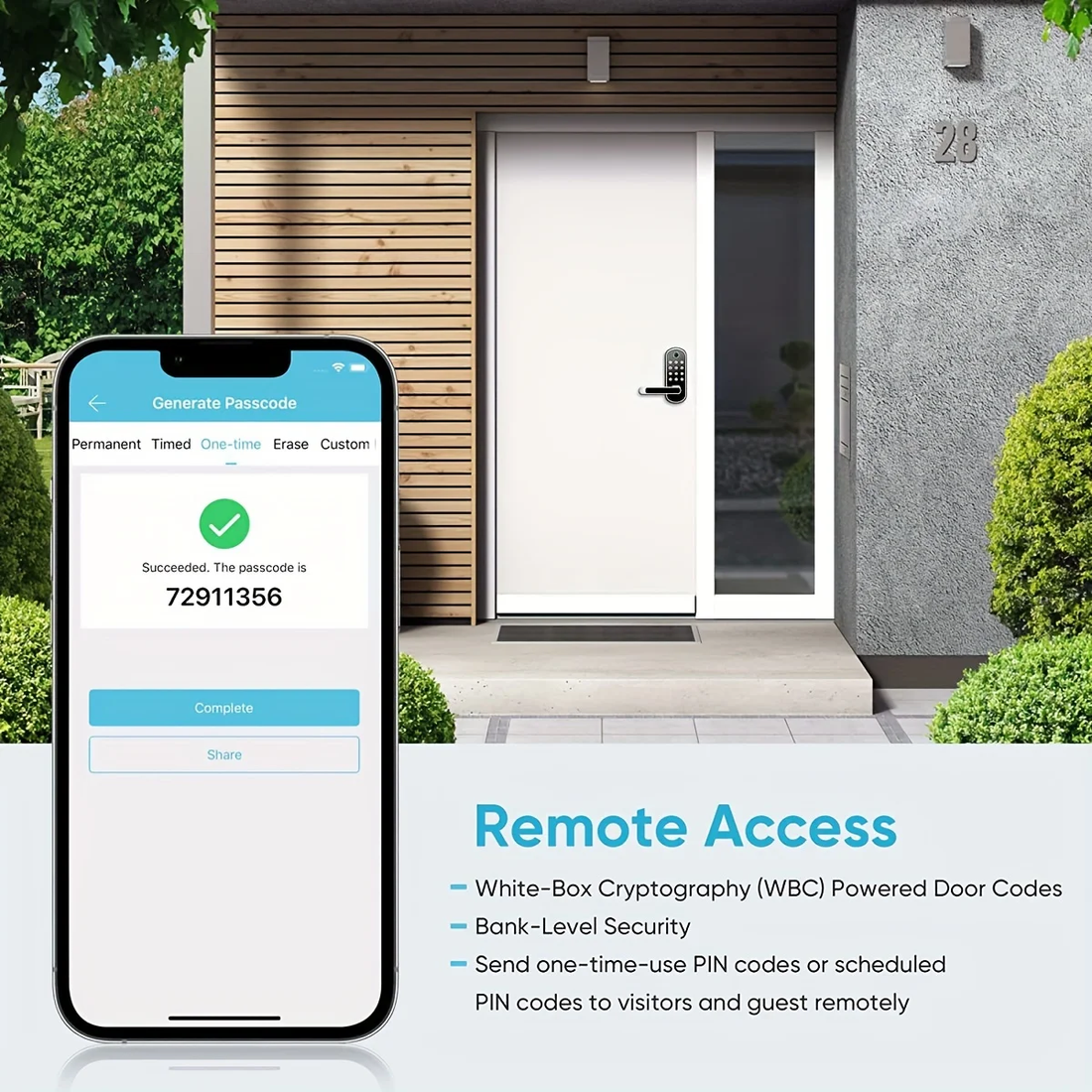
Stop meeting guests to hand over keys. A properly configured smart lock generates a unique PIN for every booking, activates exactly when check-in starts, and expires the moment check-out ends.
From £249per property, hardware + full setup
The real cost of keys on a short-let
Every physical key on a short-let property is a small recurring tax on your time. Someone has to be there at check-in, or you leave a key somewhere and hope. Flights slip. Trains are late. A guest lands at half eleven on a Tuesday and you're driving across Manchester to let them in — or worse, you're not available and they're standing outside your property writing the review in their head.
The usual workaround is a lockbox. They're cheap, they're quick, and they're the single most common weak point we see on short-lets. A lockbox code gets shared between guests, photographed, written in group chats, and left unchanged for months because changing it means physically going there. The box itself advertises to the street that the property is a short-let and that the key is in a metal case screwed to the wall. Plenty of blocks of flats and managing agents have banned them outright for exactly that reason.
Then there's turnover. Cleaners need access on changeover day. Maintenance needs access when something breaks. Each one is another key handed out, another copy you can't account for, and no record of who actually went in or when.
How automatic guest codes actually work
A properly configured smart lock replaces all of that with a code per booking. The code activates when check-in opens, stops working when check-out passes, and is unique to that guest. Nobody hands anything over. Nobody needs to be there.
The important word is configured. A smart lock out of the box will happily sit there as an expensive keypad, with one fixed code you change by hand — which is a lockbox with extra steps. The value only appears once the lock is connected to how you actually take bookings, so codes are generated and retired without you touching anything.
Once that's running, the day-to-day gets much quieter. A guest who arrives early can be let in early with a tap. A guest who books a late check-out gets their window extended without a visit. Your cleaner gets a code that only works on changeover mornings. Your plumber gets one that works for three hours on Thursday and never again. And every one of those entries is logged, so if something's missing or a door was left open, you can see who was in the property and when.
What we set up
- Supply and fitting of your chosen smart lock (see lock brands we install)
- TTLock cloud account setup and configuration, in your name — you own the account, not us
- Guest PIN auto-generation tied to your booking calendar
- Separate recurring access for cleaners and maintenance, on their own schedules
- Access logs switched on and explained, so you can actually check them
- A short walkthrough so you're comfortable running it yourself day-to-day
- Written handover notes for your records
Choosing the right lock for a short-let
Short-lets are harder on a lock than a family home. A front door that gets used twice a day in a normal house might see fifteen or twenty operations a day during a busy changeover. That affects which hardware makes sense and how often batteries need attention.
The three things that actually decide the choice are your door, your WiFi, and your turnover. A uPVC or composite door with a multipoint mechanism needs different hardware from a timber door with a night latch. A property with a solid router near the front door can use a fully cloud-connected lock; a top-floor flat where the signal dies in the hallway needs a lock that can validate codes offline. High turnover pushes you towards models with better battery life and a physical key override, because a flat battery on a changeover day is a genuinely bad afternoon.
We check all three before recommending anything. If you already own a lock, we'll tell you honestly whether it suits the property or whether you'd be better off changing it.
What can go wrong, and how we plan around it
Flat batteries. Smart locks warn you well in advance, and most take an external power pack or a physical key as backup. We show you where the warnings appear and what the fallback is before we leave, so it's never a surprise at 11pm.
Internet drops. If your property's connection is unreliable, we specify a lock that generates and validates codes without needing to phone home. You lose remote features while it's down, not the ability to get in.
A guest who can't get in anyway. Usually a mistyped code or a guest looking at the wrong booking. Because you can see the access log and issue a fresh code from your phone, this is a two-minute fix rather than a drive across town.
The lock outliving the platform. We set the cloud account up in your name and hand you the credentials. If you stop working with us, nothing stops working.
Questions
Frequently asked
Most smart locks retrofit onto a standard euro-cylinder or standard door prep. We check your door as part of booking so you're not guessing which hardware fits.
Depends on the lock — some can generate and validate codes offline, others need a live connection. We'll recommend hardware suited to how reliable your property's WiFi actually is.
Most models we install support a physical key override alongside the code/app access, so you're not locked out if a phone battery dies.
It depends on the lock and how busy the property is — a high-turnover short-let works the lock far harder than a family home. Every lock we fit warns you well before it runs out, and we show you where that warning appears and what the backup is before we leave.
No, and they shouldn't have it. We set cleaners up with their own recurring access on the days they actually work, separate from guest codes. Same for maintenance — their own code, their own time window, revoked when you want.
Nothing stops working. The cloud account is set up in your name and we hand you the credentials at handover — the lock and the account are yours, not tied to us.
Usually for your own front door, but communal entrance doors and some leases have restrictions — and a few blocks ban lockboxes specifically. Worth checking your lease or managing agent before booking. We're happy to talk through what's typically acceptable first.
- Speed
- Same-day installationSubject to availability in your area
- Pricing
- Fixed-price quotesAgreed before we start, no callout fee
- Guarantee
- 12-month workmanshipWe come back and fix it, no charge
- Coverage
- Manchester & NorthwestSee coverage area
Get a fixed price for your door
Tell us the property and we'll quote it — no callout fee, no obligation.